Understanding Travel and Tourism
This is your text! Read it! Understand it!
(Take notes! Read this section by section in advance of each class so you will be prepared as we move on. Please note that this may not be a final document. It may change as I teach this class. I may email you one or more new versions of this according to how much this document changes. I will also email you other things throughout the class. Messages to you will have all or Understanding Tourism in the title. Feel free to trash the other messages.)
1. Orientation
This class will include lectures, the Internet, student participation, and students presenting homework and other items aloud (in loud and booming voices).
This class will also include some Internet reading. (Use two windows, one for what you are reading and one for a dictionary. I think the dictionary at www.alc.co.jp is pretty good.)
Key words and expressions
Yes.
No.
I don¡Çt know.
I don¡Çt understand.
Please explain.
Can you speak more slowly?
Can you repeat that?
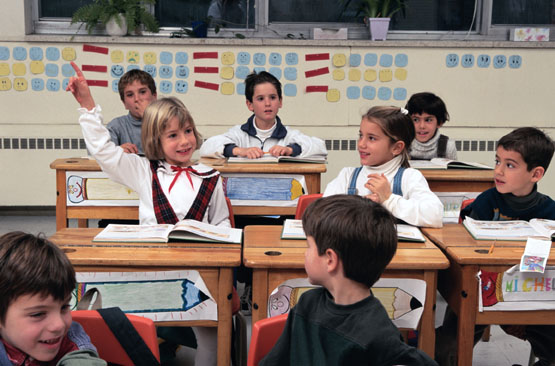
Stop me if you don¡Çt understand! Raise your hand and tell me!
(I have a responsibility to speak so you can understand. You have a responsibility to let me know if you cannot understand or read my writing. Tell me!!!!!!!!!!!!!!!!!!!!!!!!!!!!!!!!!!!!!!!!!!!!!!!!!!!!!!!!!!!!!!!!!!!!!!!!!!!!!!!!!!!!!!!!!!!!!!!!!!!!!!!!)
Please ask questions in class or by email if you do not understand. That way I can answer everybody. Please do not ask me individually. That way nobody hears the answer except for the person who asks.
Important Things to Know for This Class
Attendance (3 lates = 1 absence, 1 absence = no problem, 2 absences may hurt your grade as you will have work to do in every class, which you will be graded on. 3 absences will very definitely hurt your grade!! The more classes you miss, the more difficult it will be to pass this class. It will be very difficult to miss 4 classes and pass. This is because you are graded on work that you do in class every week. The school rules say that you cannot pass if you miss more than 1/3 of your classes. They do not say that you will pass if you miss less than 1/3 of your class. Please also remember that attending class does not guarantee a passing grade. You need to attend class and do the work. If you have more absences, then you will need to do more work.)
Grades will be based on your portfolio and work done for every class. Get some kind of file and keep the work described below in it. This will be your portfolio.
Portfolio
1. Your name and number should be visible on the front of your portfolio.
2. Please put a current recognizable picture of yourself on the inside front cover of your portfolio. That is so I can recognize you when I do grading. My memories of your face as participating, not participating, or disturbing things will affect your grade.)
3. Please do your portfolio so I can turn the pages and see them easily. I do not want to have take work out of pockets! Stapled work in clear files is okay, or something fancier is fine.
4. I want your work! I do not want your friend¡Çs work! People who work together, copy work, or give work to be copied will all be penalized!
5. Please put titles on your notes for each class and for each homework assignment. Short titles are okay.
6. Size 12 font is normal. Do not use giant fonts!
7. Do not use double byte letters. Use single bytes! Double bytes are for Japanese!
8. BE SURE to put your name on each page.
Telephone ring = special homework or your departure (a departure is counted as an absence)
Other disturbances or inappropriate behavior (talking, resting, sleeping, e-mail, etc) = same (a departure is counted as an absence)
Kindly note that only one person at a time speaks in this class. When one of us speaks, the rest of us listen. Raise your hand if you have a question or would like to interrupt. PLEASE feel free to raise your hand and interrupt me at any time. If you have a question or do not understand, other students do too. Raise your hand! Ask! Please note that people who cannot keep quiet in class may be asked to leave.
Bring dictionaries (J-E and E-J) to every class
Take notes from each class (title, date, type, and place in your portfolio)
We will use the Internet (both for class use and your homework)
Your research should be from English sources unless Japanese sources are specified.
Homework (must always be typed and in English- should be from English sources unless Japanese sources are specified. Put all homework in your portfolio)
PLEASE bring your portfolio to class every day!
Final project (plan a trip abroad in detail using what you have learned in this class)
This should be put in your portfolio. It should also be typed and can include pictures. I SUGGEST THAT YOU DO NOT WAIT UNTIL THE LAST MINUTE! You can get sick and computers can break. Give yourself some extra time.
(Comment: abroad is a nice word. It has no negative connotations. Foreign can have negative connotations.)
I will collect your portfolio when we get to the 12th day of class as listed in this explanation/syllabus/text. Please be ready. Your work should be your own! You should not share it! Please do not give me your friend¡Çs work. These are good things to remember if you want to pass this class.
Late portfolios will not be accepted unless there is a very good reason. If they are accepted, they will also be marked down for being late.
Come and see me with your portfolio if you would like to talk about your portfolio and your grade at any time.
Please note that you need to do the work every week. This class will be very difficult if you get behind! Please note that this is a required class. You must pass this class to graduate. Please come to class, do the work, and pass. Otherwise we will see each other again next semester.
I am serious about everything written here. I suggest that you listen seriously. I hope to have a nice atmosphere in this class. I don¡Çt plan on yelling and screaming. That does not mean this will be an easy class or I am soft. I am from a different culture. The message you receive may not be the message I am sending.
Manners-
As commented above-
Telephones ringing, talking with friends, resting, sleeping, e-mail, etc. are not appreciated. This is not good classroom behavior. If you cannot act appropriately in the classroom, please don¡Çt come! I hope not to have to ask students to leave, but I will if I am forced to.
Names and cultural flexibility
In English, I can go by my first name or last name. Feel free to call me Rory or Mr. Baskin. I don¡Çt care. Well, actually I do care. I would rather be called Rory, but I have grown tired of telling students that. Either way I am Rory or Mr. Baskin. I am not Mr. Rory or Baskin. Both are wrong.
In Japanese, I go by my last name, which is Baskin. We will not talk Japanese together. I usually do not speak Japanese with students. I believe that there is too much Japanese spoken in English education in Japan. This is one reason why many students study English for a long time and do not speak very much English. When you use my name in Japanese and the names of other people of all nationalities, however, I expect that you remember your manners. Japanese uses honorifics (¤µ¤? ÍÍ, ÀèÀ¸) and diminutives (¤Á¤ã¤ó¡¢¤¯¤?. It is very rude in Japanese to use someone¡Çs name without an honorific or diminutive.
In your own words
All homework should be done in your own words. Please do not use your friend¡Çs words. Please do not use sample sentences from dictionaries. Please do not use translation software. It is not very good and creates strange English. Suspicious homework will result in lower grades and Fs. If you quote anybody use quotation marks and cite them. (See the definition of tourism below for an example.)
Now, getting on to the class contents¡Ä
2. Introduction
(Remember what I said about responsibility? If you don¡Çt understand or don¡Çt know, ask! Raise your hand! Do you have any questions about anything from the last class? If there is anything that I say today, and you don¡Çt understand, please raise your hand and ask. Any time is okay!)
Tourism and travel- This is a survey class. We have only one semester and will not be able to do everything. We will examine major aspects, growing niche markets, the must-sees and the road less traveled, and business travel. Travel has four basic components, which are transportation, lodging, dining, and entertainment. The term hospitality industry is often used to refer to lodging and the departments it includes.
Tourism is a big business. Eight percent of the workers in the world earned their living from tourism in 1999. That was 200 million jobs. From 2000 to 2009, tourism is creating approximately 5.5 million new jobs a year. Tourism is growing too as the world becomes wealthier. In 2000, world tourism grew by an estimated 7.4%. There were a record 699 million international arrivals in 2000. Tourism is changing the world and it will change it more in the future as more countries become wealthy. The travel industry is the largest individual industry in the world. It also contributes the most to global economic development.
Being a tourist
What is a tourist?
There are different definitions:
¡ÈTourism is all activity undertaken by people staying away from home for 24 hours (i.e. overnight), on holiday, visiting friends or relatives, at business or other conferences, or any other purpose, e.g. health other than semi-permanent employment.¡É (Warn, S. 2001. Recreation and Tourism. Cheltenham, United Kingdom: Nelson Thornes Ltd. p. 4.)
(Hint! Note the quotation marks above. These are not my words. They are Sue Warn¡Çs words. I have given her credit for them. If I do not, then I am stealing them. This is called plagiarism. Always do the same when you use someone else¡Çs words in your homework or final project. Note, however, that you should not use too many quotations. Most of the writing should be yours. This means take the information and rewrite it in your own words.)
My dictionary provides two definitions:
tourŽ¥ism
n.
1. The practice of traveling for pleasure.
2. The business of providing tours and services for tourists.
[AHD3rd]
Take a look at a few tourism pages:
(Hopefully, they are still there.)
Bruce Peninsula http://www.brucepeninsula.org/feature/feature15/feature15.htm
Chicago http://www.worldisround.com/articles/16108/
Czech Republic http://photos.jpeek.com/czech_republic_2002/4_outside_prague/
Homework: Play tourist. (You don¡Çt need to spend the night away though!) You can either play tourist around here, or you can be a virtual tourist and go somewhere on the Internet. Write about your experiences. Feel free to include pictures. (Pictures are optional. The homework, naturally, goes in your portfolio.) Remember that your name and the date should go on your homework assignment.
Think about the following while you play tourist. What do you enjoy as the visitor? What about the people you are visiting? What impact does your tourism make on the local people? Consider negative and positive impacts. Is there any recreated culture? Is it real or not?
Hint: When I say to think about something, I really mean it. This means that you may be asked about it in class or quizzed on it. You should be ready to speak up quickly about it. (Your class speaking or lack thereof may be reflected in your grade.)
Business vs. Pleasure
Is the trip for business or pleasure? Both are included in travel and tourism.
Most of this class will focus on tourism for pleasure, which is also referred to as leisure travel, but business travel is also included. The areas overlap in many places. What is the same and what is different?
3. Planning a trip (tourist vs. travel agent or travel planner), Jobs for planning (travel agent, travel planner) Jobs carrying trips out (tour conductor)
(Remember what I said about responsibility? If you don¡Çt understand or don¡Çt know, ask! Raise your hand! Do you have any questions about anything from the last class? If there is anything that I say today, and you don¡Çt understand, please raise your hand and ask. Any time is okay!)
Tour conductor http://www.ie-eg.com/egyptlife/
Travel planner http://www.bestwaytravel.com/ (Old style travel planner versus free Internet service)
Travel agent http://www.threeland.com/
Safari planner http://www.lastminutesafari.com/ (previously travel planner)
Which of these jobs are 100% tourism jobs and which are only partly tourism jobs? Which are partly tourism jobs and which are partly recreation jobs? Tourism and recreation frequently overlap. These are only a few jobs. You could probably fill a book with all of the jobs in the travel and tourism industry. Note that these jobs range from entry level to high level, from low paid to well-paid. Some are respected and some are not¡Ä
¡ÈRecreation is usually defined as any pursuit engaged upon during leisure time.¡É (Warn, S. 2001. Recreation and Tourism. Cheltenham, United Kingdom: Nelson Thornes Ltd. p. 4.)
Adventure travel specialists (hard and soft, half of American adults have taken an adventure trip in the past five years. Hard ? white water rafting Soft- guided horseback tour)
Air traffic controllers
Aircraft mechanics
Airplane dispatchers
Amusement park workers
Baggage porters and bellhops
Bartenders
Bed and breakfast (B&B) owners
Cooks and chefs
Cruise ship workers
Festival organizers
Flight attendants
Food service workers
Gaming employees
Guest services manager
Helicopter pilots
Historical interpreters
Hotel and motel managers
Hotel concierges
Hotel desk clerks
Hotel executive housekeepers
Hotel restaurant managers
Inbound tour guides (short excursions)
International correspondents (newspaper, radio, or TV)
Lifeguards
Locomotive engineers
Marina operators
Meeting and convention planners
Museum attendants
Museum teachers
National park service employees
Pilots
Public transportation operators
Reservation and ticket agents (airlines, bus companies, railroads, cruise lines, ferries)
Resort workers (wide variety of jobs at spas, luxury hotels, casinos, theme parks, and lodges ranging from entry level jobs to highly skilled jobs. Club Med is the largest resort chain in the world. They employ about 11,000 workers every season.)
Safari planners
Ski resort workers (approximately 490 in the USA)
Taxi drivers
Travel agents (Thomas Cook 1841 ?first excursion; first American travel agency 1872)
Tour guides
Travel writers
Homework: Which one of these jobs would you like to do the most? Why? Research in Japanese or English what one workday might be like for you. Write about an imaginary workday. As all homework is always in English, write in English. (If you would like to write about a job in tourism that is not listed, feel free. There are many tourism jobs that are not listed above.)
4. Where are you going to go? (Find your destination.)
(Remember what I said about responsibility? If you don¡Çt understand or don¡Çt know, ask! Raise your hand! Do you have any questions about anything from the last class? If there is anything that I say today, and you don¡Çt understand, please raise your hand and ask. Any time is okay!)
Different people go to different places according to how much time and money they have. Some people take package tours.
(Package tours are sold by wholesalers to travel agencies who then retail them. The wholesalers get volume discounts on the components of the tour. They sell them to the travel agents who mark them up. People take package tours for a number of reasons. Part of this is related to the meaning of travel, which is discussed below, and their lack of knowledge of travel geography, which is discussed in Section 8.)
Some people go to visit friends or family. Some people plan their trips on their own. Some people just wander. The land of today¡Çs adventurous wanderer is the land of tomorrow¡Çs package tour.
Remember that travel for most people for enjoyment is fairly new. The word for travel comes from travail in French. One meaning of travail is trouble. Travel used to be hard and dangerous. It was for adventurers and the elite. It was only from the 19th century with Thomas Cook and American Express that traveling become something that the general public in England and America could do for enjoyment. Thomas Cook introduced the first tours and the first retail travel agency. American Express was among the first in America to provide such services to the public. American Express was a subsidiary of Wells Fargo. Then came hotels, automobiles, airplanes, and finally, the jet age saw passenger jets starting in 1952.
Homework: Where are you going to go? Why? Find two destinations. One less traveled and one more popular. How do you plan your trips? Do you go where your friend is going? Where you have friends? Where you have always wanted to go? Where the travel agent suggests? If you do not take trips, imagine what you would do and write about that. The more information you can provide, the better. Think about planning your own trip versus taking a package tour. What do you think?
I STRONGLY suggest that you visit me and show me your portfolio to make sure you are doing everything okay. You will not pass this class if your portfolio is not okay.
Extra Homework: Highly recommended if you want an A. Find a penpal in the country where you want to go. Email back and forth with them. Include the email in your portfolio. Try http://penpalnet.com/
5. Health and safety and money
(Remember what I said about responsibility? If you don¡Çt understand or don¡Çt know, ask! Raise your hand! Do you have any questions about anything from the last class? If there is anything that I say today, and you don¡Çt understand, please raise your hand and ask. Any time is okay!)
Without health and safety you have not got anything. If, however, you worry to much, you will never go anywhere. There are, of course, certain rules that we must remember almost everywhere we travel. There is also money. It is best not to throw it away¡Ä
Rule number 1- Don¡Çt be a target!
Don¡Çt carry too much cash. Use traveler¡Çs checks.
Don¡Çt leave valuables in your hotel room. Carry your valuables securely.
Don¡Çt flash cash. Keep your passport, travel documents, and credit cards with you at all times. Keep them where they are safe! Leave copies of everything with someone in case you have an emergency.
Don¡Çt drink too much. What happens when you lose control?
Don¡Çt take illegal drugs. What happens when you lose control? What happens when the police come? Will you be lucky and get deported or will you be unlucky and go to jail?
Do not leave your luggage or any items behind, even for a few minutes.
What can you do if you travel alone? Ask someone.
What about hitch-hiking? Don¡Çt!
What about women traveling alone? Be careful!
Be careful with money. Know your exchange rates!
Pay attention to prices. Do you need to ask first? Do you need to bargain?
The sites below are all English sites to check on health and safety before traveling.
Consider-
Crime- purse-snatchers, bag-slitters, pickpockets, guns, credit cards, kidnappers, bandits¡Ä Disease- Yellow fever, malaria, hepatitis, AIDS¡Ä
War/terrorists/revolutionaries/guns- Safety versus paranoia
Some places are better left avoided.
International Travel Healthline http://www.travelhealthline.com/
International Travel and Health (WHO) http://www.who.int/ith/
Center for Disease Control and Prevention (CDC)
http://www.cdc.gov/travel/index.htm
US Department of State Travel Warnings and Consular Information Sheets http://travel.state.gov/travel_warnings.html
Travel Safety http://www.safewithin.com/travelsafe/
Insurance is also usually a good idea! Why? Take a look at-
Travel Guard (http://www.travelguard.com/)
TFG Global Travel Insurance.com (http://www.globaltravelinsurance.com/)
Homework:
Find one safe place you would like to go. What is the place? Are there any problems there? Is any place perfectly safe?
Find one dangerous place that looks interesting. What is the place? What are the dangers there? Can you find Japanese sites which provide the same kind of information? Do they give the same information as the English sites or different information? Explain.
Will we have a quiz next week? Study in your notes and this virtual handout up to here.
6. How are you going to get there and get around there? (Transportation)
(Remember what I said about responsibility? If you don¡Çt understand or don¡Çt know, ask! Raise your hand! Do you have any questions about anything from the last class? If there is anything that I say today, and you don¡Çt understand, please raise your hand and ask. Any time is okay!)
Singapore Airlines http://www.singaporeair.com/saa/app/saa
RyanAir http://www.ryanair.com/
EasyJet http://www.easyjet.com/
Ethiopian http://www.flyethiopian.com/newsite/
Alternative bus http://www.greentortoise.com
Train http://www.raileurope.com
Cruises http://www.carnival.com/
Ferries http://www.greekferries.gr/
Nova Rentacar Reservations Ireland http://www.rentacar-ireland.com
Subway http://www.thetube.com/
Local buses
http://www.accessibility.com.au/sydney/travel/bus/busroute1.htm
Think about cost, safety, time, comfort, how much you can see, and how you want to see it.
Homework: Pick a new holiday location (one that you have not used for homework). Write about your transportation to get there and travel around there. What transportation will you use? How much will it cost? How will you pay for it? The more information you can provide, the better.
7. Where are you going to stay?
(Remember what I said about responsibility? If you don¡Çt understand or don¡Çt know, ask! Raise your hand! Do you have any questions about anything from the last class? If there is anything that I say today, and you don¡Çt understand, please raise your hand and ask. Any time is okay!)
Hotels, motels, bed and breakfasts, youth hostels, and campgrounds. There are a wide variety of places to stay depending on your interests and budget. A big hotel has a number of departments. They are the front office, housekeeping, engineering, security, food and beverages, sales and marketing, accounting, and personnel. In America, there has been a long period of transition as hotels and motels have moved from independent ¡Èmom and pop¡É organizations to chains. The brand is an important part of lodging, but it may be becoming less important than it used to be due to the proliferation of brands and other reasons. Some of these jobs in a big hotel will be done by fewer people in a small motel or hotel, and some will not be done at all. (The hotel also developed into the resort over time.)
http://www.hotels.com/
http://www.bedandbreakfast.com/
http://www.whistler.com
Youth hostels
http://www.iyhf.org/home_gb.html
Homework
Homework: Pick a new holiday location (one that you have not used for homework). Write about your lodging there. What lodging will you stay in? Why? How much will it cost? What are the advantages and disadvantages of it? The more information you can provide, the better.
What are you going to eat?
In America, restaurants used to be primarily in hotels. The freestanding restaurant is fairly recent, and now there are many of them. Again, there has been a long period of transition as hotels and motels have moved from independent ¡Èmom and pop¡É organizations to chains. The brand is an important part of restaurants. Lately, hotels use branded restaurants to improve their business. These restaurants are replacing hotel restaurants that were not very good and did not make money for the hotel. In addition, free standing ¡Èmom and pop¡É restaurants are being displaced by chains. This is a global trend.
Homework
Pick a new holiday location (one that you have not used for homework). Write about what you will eat there. Why? How much will it cost? What are the advantages and disadvantages? Carefully consider what local food you will try. The more information you can provide, the better.
8. What are you going to do when you get there? Entertainment including famous sites
(Remember what I said about responsibility? If you don¡Çt understand or don¡Çt know, ask! Raise your hand! Do you have any questions about anything from the last class? If there is anything that I say today, and you don¡Çt understand, please raise your hand and ask. Any time is okay!)
Famous sites in Venice (http://goeurope.about.com/library/weekly/aa073002a.htm)
IAAPA (International Association of Amusement Parks and Attractions) http://www.iaapa.org/
Museums- The Louvre (http://www.louvre.fr)
Cathedrals- St. Paul¡Çs (http://www.stpauls.co.uk)
We will examine tourism geography in this section. Tourism geography is a very important area in travel and tourism. This knowledge is needed to both get to places, and more importantly what there is to see when you get there. Think about the major tourist destinations of the world. What are they? What are the essential elements of tourism geography for these destinations?
Travel agents need tourist geography to sell their services. Travelers need it to travel.
Homework
Pick a new holiday location (one that you have not used for homework). Write about what you will do there. The more information you can provide, the better.
9. Niche tourism (Children, senior citizens, disabled, eco-tourism, responsible tourism, sports tourism, and volunteer tourism)
(Remember what I said about responsibility? If you don¡Çt understand or don¡Çt know, ask! Raise your hand! Do you have any questions about anything from the last class? If there is anything that I say today, and you don¡Çt understand, please raise your hand and ask. Any time is okay!)
Ottawa Children and Youth Programs
(http://www.ottawa-conventions.com/children_youth.html)
Victorian Seniors Card Holders
(http://www.dhs.vic.gov.au/seniorscard/directories/tourism/)
Society of Accessible Travel & Hospitality (http://www.sath.org/)
Wheelchair Tourism (http://www.disabilitytravel.com/)
The International Ecotourism Society (http://www.ecotourism.org/)
Pro-Poor Tourism http://www.propoortourism.org.uk
The International Centre for Responsible Tourism
(http://www.theinternationalcentreforresponsibletourism.org)
Responsible Travel (http://www.responsibletravel.com)
Sports Tourism International Council (http://www.sportquest.com/)
Homework
1. Pick a niche tourism area that you would like to experience. Which one would you like to try? Why? What would you like to do? The more information you can provide, the better.
2. Imagine being a travel agent for a person with special needs (age, handicap, special vacation desires). What are the special needs of this person? Give an outline of a plan for a trip for them.
10. Promotion and marketing
(Remember what I said about responsibility? If you don¡Çt understand or don¡Çt know, ask! Raise your hand! Do you have any questions about anything from the last class? If there is anything that I say today, and you don¡Çt understand, please raise your hand and ask. Any time is okay!)
Yemen Tourism (http://yementourism.com/index.htm)
Visit USA (http://www.visitusa.org/info/infowho.html)
Almost every business advertises, promotes, and does marketing. Tourism and travel are no exception. Successfully done, advertising, promoting, and marketing bring more business. How these three are used depends on what part of the tourism and travel industry is doing the work and how they are doing it.
Advertising includes print media, television, radio, and the Internet. Promotions generally offer something for free or at a reduced value to stimulate demand and interest. Marketing is everything and includes advertising and promotions. Waller, speaking of the hotel business, defines marketing as ¡ÈMarketing is a process of creating and sustaining productive relationships with desirable customers. The goal: to produce such relationships more effectively than do your competitors.¡É (Waller, F. ¡ÈBuilding Market Leadership: Marketing as a Process.¡É In Hotel Management and Operations, Rutherford, D (ed.). New York: John Wiley and Sons, Inc., p. 294.)
Homework
Find a tourism site in your area. How would you market it? The more information you can provide, the better.
11. Business Travel
(Remember what I said about responsibility? If you don¡Çt understand or don¡Çt know, ask! Raise your hand! Do you have any questions about anything from the last class? If there is anything that I say today, and you don¡Çt understand, please raise your hand and ask. Any time is okay!)
Business travel and leisure travel are very different and very similar. Leisure travel is for pleasure, while business travel is work. Yet, both travel to their locations, stay somewhere, and eat. Both contribute to jobs and the local economy. Many business travelers do some tourism during business trips. Business travel, like leisure travel, is affected by the economy and world events.
http://www.business-travel-net.com/
http://businesstravel.about.com/
If we look at why people travel for business, the business travel market is composed of three components.
1. Corporate travel
This is people traveling on business for many reasons including sales, inspections, and meetings. This is the group that often pays the highest rates because they have the least time to make their arrangements. Technology has helped this group in many ways to reduce travel if they would like to. When costs get too high, corporations reduce travel by using technology or by reducing the travel rates. Corporate travelers can sometimes get special rates from airlines, hotels, and others that want their business. It all depends how flexible the corporate travelers can be and how much their business is wanted.
2. Commercial group travel
This is people traveling for conventions, meetings, and conferences. Such travel involves large groups and they have time to plan, which may give them discounts.
3. Institutional travel
These are people who work for institutions such as the government, schools, and hospitals. They share much in common with corporate travel. Like corporate travelers, institutional travelers can sometimes get special rates from airlines, hotels, and others that want their business. It all depends how flexible the institutional travelers can be and how much their business is wanted.
Homework
There is no homework this week except for your notes and feedback. You should be working on your final report, which is due the next class along with your feedback. Please hand them in separately.
12. I will collect your portfolios one by one and quickly skim them in case I have any questions. I hope you have done your work! Please follow the instructions in this file so I do not have any questions! Maybe we will have a quiz while I do this. Study your notes and this virtual handout.
Feedback
The feedback is about the teacher and the teaching. It is not about what you did or did not do. This is not the place for apologies. This is information to help the teacher to improve this class in future years. The teacher will keep this and will not give it back. If you would like to keep a copy, then print two copies, and keep one. This feedback should be at least a half a page. Do not put it in your portfolio.
Feedback will be collected the final class. Many students have already told me that I give too much homework. Feedback on that is not necessary. Homework is good for you. It helps you to study and improves your English. Please answer the following questions in your feedback.
How much did you learn from this class?
What was good about this class?
What was bad about this class?
What else would you like to see included in this class?
Additional comments that will provide helpful information for the teacher.
(Note that feedback should have positive and negative comments. I liked¡Ä, I didn¡Çt like, I learned from¡Ä, I didn¡Çt learn from¡Ä, I wanted to learn¡Ä, I didn¡Çt want to learn¡Ä, XXX helped me the most¡Ä, XXX didn¡Çt help me¡Ä, etc.)
PLEASE DO NOT put the feedback in your portfolio. Please submit it separately, typed, on B5 size paper. This will not be returned. If you want to keep a copy, please print two copies and keep one.
Return to my main page.
Copyright © 2004, Rory Baskin